

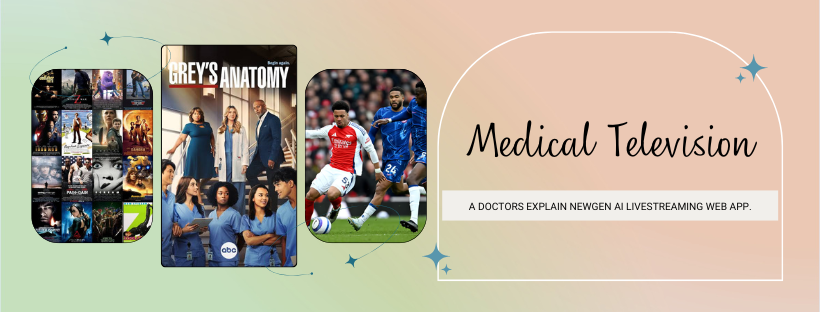
How MedicalTV Live is Revolutionizing Access through AI, IPTV, and Universal Casting
- February 17, 2026
- 0 Likes
- 315 Views
- 0 Comments
In the rapidly evolving landscape of digital health and multimedia, a quiet revolution is brewing in Nairobi, Kenya. It is a revolution that promises to dismantle the barriers of literacy, hardware costs, and fragmented information that have long plagued public health education in Africa. At the center of this transformation is MedicalTV Live, a platform designed not merely as a streaming service, but as a comprehensive ecosystem integrating Artificial Intelligence (AI), Internet Protocol Television (IPTV), and universal accessibility tools.
As we look toward the next few years, the convergence of high-speed internet penetration and innovative software solutions like MedicalTV Live is set to dramatically alter how patients, families, and clinicians consume medical content. This article explores the depth of these innovations—specifically the remote control features, casting capabilities, multimedia players, and playlist creation tools—and analyzes their profound potential to democratize healthcare information across the continent.
PART 1: The Critical Gap in African Healthcare Media
To understand the magnitude of the solution MedicalTV Live offers, one must first appreciate the scale of the problem. As noted in the platform’s foundational documents, the physician-to-population ratio in Kenya stands at a staggering ~0.1 per 1,000 people. This shortage creates a vacuum where professional medical advice is scarce, and the demand for health information is insatiable.
Currently, this vacuum is filled by a fragmented mix of “push” media: broadcast TV health segments that air at inconvenient times, radio streams that cannot be paused, and social media clips that are often riddled with misinformation. Families struggle to find trustworthy programs quickly, and even when they do, viewing them on a shared family screen (the TV) is often technically difficult or requires expensive hardware like Apple TV or Chromecast.
MedicalTV Live steps into this breach with a “Pull TV” model, shifting the paradigm from passive consumption to on-demand, interactive learning. By unifying live channels, Video on Demand (VOD), and catch-up libraries into a single web-based application, it positions itself as the “Netflix for health education”.
PART 2: Deconstructing the Innovations
The core of MedicalTV Live’s transformative potential lies in its technical architecture. Unlike competitors that rely on heavy app downloads or proprietary hardware, MedicalTV Live utilizes a web-first approach. Let us analyze the specific innovations hosted on their platform and how they contribute to this vision.
1. The Medical Multimedia Player: A Unified Interface
(Ref: https://medicaltv.live/medical-multimedia-player)
The proprietary Medical Multimedia Player is the heart of the ecosystem. In the context of African connectivity, where device storage is often low and data is precious, the decision to build a web-based player is strategic.
- Accessibility: The player supports Live IPTV channels, VOD libraries, and Catch-up viewing all in one app. This means a user does not need to switch between YouTube for clips and a radio app for audio; the player handles it all.
- Resilience: The player is built with an “IPTV reliability layer” designed to handle stream startup times, buffering rates, and live latency. In regions with fluctuating 4G/5G signals, this optimization is crucial for maintaining user engagement.
- Versatility: It is designed to work across Smart TVs, phones, tablets, and laptops, ensuring that the barrier to entry is simply an internet connection, not a specific device brand.
2. Universal Cast & Mirror: Breaking the Hardware Barrier
(Ref: https://medicaltv.live/cast-mirror/)
Perhaps the most significant barrier to digital health education in the living room is the “Cast” friction. Typically, casting from a phone to a TV requires both devices to be on the same high-speed WiFi and often requires specific compatible hardware.
MedicalTV Live’s approach to Cast/Mirror utilizes WebRTC (Web Real-Time Communication) where possible, with an automatic snapshot fallback for compatibility.
- The Innovation: This allows users to “throw” content from their smartphone to any web-enabled TV screen without needing a dongle.
- The Impact: In a typical Kenyan household, the smartphone is the primary personal device, but the TV is the communal gathering point. By making casting frictionless, MedicalTV Live transforms health education from a solitary activity (staring at a phone) into a communal family experience. A mother learning about nutrition can cast the video to the TV so the whole family learns together.
- Reliability: The system uses a “best-effort” fallback mode, acknowledging that not every user has perfect WiFi. This engineering choice reflects a deep understanding of the African infrastructure context.
3. The Virtual Remote Control
(Ref: https://medicaltv.live/remote-control/)
Navigating a web browser on a Smart TV is notoriously difficult using standard TV remotes. MedicalTV Live solves this with its Virtual Remote technology.
- WiFi & BLE Pairing: The technology allows a user’s smartphone to act as the remote controller for the screen. It works via WiFi pairing on most modern browsers and offers optional Bluetooth Low Energy (BLE) support.
- Hygiene & Usability: For clinicians in a hospital setting, touching a shared remote control is a vector for infection. A personal smartphone acting as a controller is a significant sanitation upgrade. For home users, it offers a familiar touch interface (swiping, tapping) to control the big screen, bypassing the clunky TV interface.
- Voice Integration: The remote interface is designed to work seamlessly with voice commands, bridging the literacy gap (discussed further in Part 3).
4. M3UFileMaker: Democratizing Content Curation
(Ref: https://medicaltv.live/M3UFileMaker/)
While not a consumer-facing feature, the M3UFileMaker represents a massive opportunity for scaling the content side of the equation.
- The Concept: M3U is a file format for multimedia playlists. By providing a tool to easily create and manage these files, MedicalTV Live allows for the rapid ingestion of diverse content sources.
- The Opportunity: This tool enables the platform to aggregate “health TV, medical radio, and wellness channels” from various creators. It paves the way for a “creator economy” in healthcare, where verified doctors, NGOs, and medical schools can curate their own playlists (channels) that are then distributed via the MedicalTV platform. This moves the burden of content creation from a single entity to a distributed network of experts.
PART 3: AI and Voice – The Great Equalizers
The most futuristic yet immediately applicable aspect of MedicalTV Live is its integration of Artificial Intelligence and Voice User Interface (VUI). In Africa, where literacy rates vary and digital literacy (the ability to navigate complex menus) is a hurdle, Voice is the ultimate equalizer.
Voice-First UI for Accessibility
The platform is designed with a “voice-first assistant for discovery & control”.
- Natural Language Processing: Instead of typing “cardiology symptoms,” a user can simply say, “Play medical radio” or “Search YouTube for cardiology lectures”. This removes the friction of typing on small screens or navigating complex text menus.
- Hands-Free Utility: For medical professionals, this is a productivity tool. A surgeon or nurse with occupied hands in a ward can issue commands like “Play first aid” or “Open profile” without breaking sterility or workflow.
- Short Intent-Based Commands: The system recognizes short, intent-based commands like “open,” “play,” “search,” and “volume”. This simplicity is key for rapid adoption among non-technical users.
AI-Driven Personalization and Auto-Suggestion
One of the key metrics for the platform is “Time-to-first-play”. The faster a user gets to relevant content, the more likely they are to stay.
- The Recommendation Engine: The platform uses “lightweight profiles” to track behavior signals such as voice commands, search history, and favorites. Over time, the AI builds a profile based on age, country, education, and interests.
- Combating Misinformation: In a world of “Dr. Google,” finding accurate info is hard. MedicalTV Live’s AI doesn’t just suggest popular videos; it suggests verified content. The “Unfair Advantage” described in the documents includes a “Curated health streaming catalog tied to a trusted brand ecosystem”. The AI acts as a gatekeeper, ensuring that autosuggestions guide users toward medically sound advice rather than viral hoaxes.
PART 4: Huge Libraries and Content Ecosystems
The vision for MedicalTV Live is to host “Huge Libraries” of content. This is not just about volume; it is about the diversity of media formats.
The Trinity: Video, Radio, and Podcasts
The platform recognizes that different learners need different formats.
- Live IPTV: Real-time channels for breaking health news or scheduled programming.
- VOD (Video on Demand): A Netflix-style library for deep dives, training modules, and explainers.
- Medical Radio/Audio: This is critical for Africa, where radio remains a dominant medium. The platform aggregates medical radio streams, allowing users to listen to health discussions while commuting or working, similar to a podcast but with the immediacy of broadcast.
Catch-Up TV
A major limitation of traditional broadcast TV is that if you miss the show, it’s gone. MedicalTV Live introduces “Catch-up / Time-shifted” viewing.
- Retention: Clinicians working night shifts can watch seminars they missed during the day.
- Repetition: Patients struggling to understand a diagnosis can “rewind and revisit key lessons”, significantly improving health literacy and adherence to treatment.
PART 5: Impact on Public Healthcare (Promotive & Preventive)
The ultimate goal of MedicalTV Live is not profit, but impact. The documents highlight a mission to support “wellness and chronic conditions” and “households seeking health education”. Here is how the platform will contribute to public health in the coming years.
1. From Curative to Preventive
Most African healthcare systems are burdened by curative care—treating people only after they are sick. MedicalTV Live shifts the focus to promotive and preventive care.
- NCD Management: For chronic diseases like diabetes and hypertension, lifestyle management is key. Dedicated TV channels can run 24/7 programming on diet, exercise, and medication adherence, acting as a constant “virtual nurse” in the home.
- Maternal Health: Dedicated channels for “MCH” (Maternal and Child Health) can guide mothers through pregnancy and early childhood, reducing infant mortality rates through education on warning signs and nutrition.
2. Institutional Deployments
The business model includes B2B licensing for hospitals and medical schools.
- Waiting Rooms: Instead of playing soap operas or blank screens, hospital waiting rooms can stream MedicalTV Live, turning wait time into learning time. Patients enter the consultation room better informed, making the doctor’s job easier.
- Ward Screens: In-patient wards can offer entertainment that is also educational, helping patients understand their recovery process.
3. Rapid Response to Outbreaks
In the event of a pandemic or local outbreak (e.g., Cholera or Ebola), the “Live” aspect of MedicalTV becomes a critical public safety tool. Government agencies and NGOs can utilize “Sponsored health programming” to instantly broadcast safety protocols to millions of households via the app, bypassing slow traditional media channels.
PART 6: Affordability and Accessibility
For this revolution to take hold in Kenya and Africa, it must be affordable. MedicalTV Live addresses this through a tiered and optimized model.
1. The Freemium Model
The platform adopts a “Freemium + ads” model for consumers. This ensures that low-income households are not excluded by a paywall. Essential health information remains free, supported by “brand-safe sponsorships” from ethical partners.
2. Bandwidth Optimization
Data costs are a significant concern in Africa. The platform’s infrastructure focuses on “IPTV stream delivery (bandwidth, edge caching)”. By optimizing the stream for low-bandwidth environments, the platform ensures that users don’t burn through their data bundles just to get basic health info. The “Audio-only” options (Medical Radio) further enhance accessibility for those on very limited data plans.
3. Hardware Independence
By relying on the user’s existing smartphone and any web-enabled screen, MedicalTV Live removes the need for users to buy set-top boxes or satellite dishes. This “Bring Your Own Device” (BYOD) approach massively lowers the capital expenditure required for a household to access world-class health education.
PART 7: Future Outlook (2026-2030)
As we look at the trajectory set by MedicalTV Live, the next five years promise dramatic changes.
- The Rise of the “Health Creator”: With tools like M3UFileMaker and the “Creator flywheel”, we will see the rise of African medical influencers—verified doctors and nurses creating high-quality local content. This content will be culturally relevant and linguistically appropriate, moving away from Western-centric health advice.
- Integration with Telehealth: The team behind MedicalTV Live is “Doctors Explain,” who already have experience with telehealth and MHMIS (Mental Health Management Information Systems). It is inevitable that the TV platform will eventually integrate with telehealth, allowing a user to watch a video on flu symptoms and immediately “Click to Call” a doctor via the same interface.
- Data-Driven Public Policy: The analytics from the platform—measuring “minutes watched/week” and “favorites saved” —will provide NGOs and governments with unprecedented data on what health topics the population is most concerned about. This will allow for highly targeted public health interventions.
Conclusion
MedicalTV Live is not just a streaming app; it is a digital infrastructure project for public health. By combining the ubiquity of the smartphone, the communal power of the television, and the intelligence of AI, it solves the “last mile” problem of health education.
Through innovations like the Virtual Remote, Universal Cast/Mirror, and the Medical Multimedia Player, it respects the technological realities of the African market while pushing the boundaries of what is possible. As it scales, it offers a vision of a future where trusted medical knowledge is not a privilege of the few, but a ubiquitous utility accessible to all—available at the sound of a voice, on any screen, at any time.
This is the dawn of Promotive “Pull TV,” and it is set to save lives.
Deep Dive: The Technological Pillars of MedicalTV Live
To fully appreciate the transformation, we must detail the specific technological pillars mentioned in the source material that make this scalable.
1. The Mechanics of the “Remote Control”
(Ref: https://medicaltv.live/remote-control/)
The concept of the remote control here is a paradigm shift. Traditional IPTV solutions often rely on infrared remotes or proprietary Bluetooth remotes that cost money and break easily. MedicalTV Live’s implementation leverages the supercomputer in everyone’s pocket.
- WebSocket / Real-Time Communication: The technology likely utilizes low-latency WebSocket connections to pair the mobile browser with the TV browser. This allows for near-zero latency. When a user taps “Pause” on their phone, the TV reacts instantly.
- Dynamic UI: Unlike a static plastic remote, the interface on the phone can change based on context. If the user is watching a surgical tutorial, the remote could theoretically display related buttons like “Zoom,” “Slow Motion,” or “Bookmark Timestamp”—features impossible with a standard remote.
2. The Architecture of “Cast & Mirror”
(Ref: https://medicaltv.live/cast-mirror/) Casting is usually a proprietary war zone (AirPlay vs. Chromecast vs. Miracast). MedicalTV Live’s use of WebRTC is a strategic masterstroke.
- Browser-Based: Because it runs in the browser, it bypasses the operating system wars. It doesn’t matter if the user has an Android and the TV is a generic brand; if both run a modern web browser, they can talk to each other.
- Snapshot Fallback: The document mentions “automatic snapshot fallback”. This is an ingenious solution for low-bandwidth networks. If a full video stream cannot be mirrored in real-time due to network congestion, the system likely sends a rapid succession of images (snapshots) and synchronizes the audio. This ensures that the information is conveyed even if high-definition video is not possible—a critical feature for rural Kenya.
3. The Ecosystem of “M3UFileMaker”
(Ref: https://medicaltv.live/M3UFileMaker/)
This tool is the engine room of the platform.
- Standardization: M3U is the industry standard for IPTV. By building a custom maker, MedicalTV Live ensures that all ingested content follows a strict metadata schema (tagging by medical specialty, language, duration).
- Scalability: This allows the platform to ingest content from thousands of sources (YouTube playlists, direct MP4 links, live HLS streams) and normalize them into a uniform user experience. It turns the chaotic web into a structured library.
The Human Element: Empowering the Workforce
Finally, the transformation extends to the healthcare workforce. The documents highlight that “Hands are often occupied” and “Continuous learning is hard to fit into busy schedules”.
- Micro-Learning: The VOD library supports “short demo videos”. A nurse can watch a 2-minute refresher on IV insertion right before performing the procedure.
- CME/CPD Tracking: The “Projections” section mentions “CME / CPD bundles”. This moves Continuing Medical Education from boring hotel conference rooms to an engaging, tracked digital experience that professionals can access from home.
MedicalTV Live is ready to partner, scale, and deliver. With a roadmap that includes 3-5 institutional pilots and the onboarding of 100+ verified channels, the infrastructure for a healthier Africa is being built today, one stream at a time.


Leave Your Comment